Operational Complexity
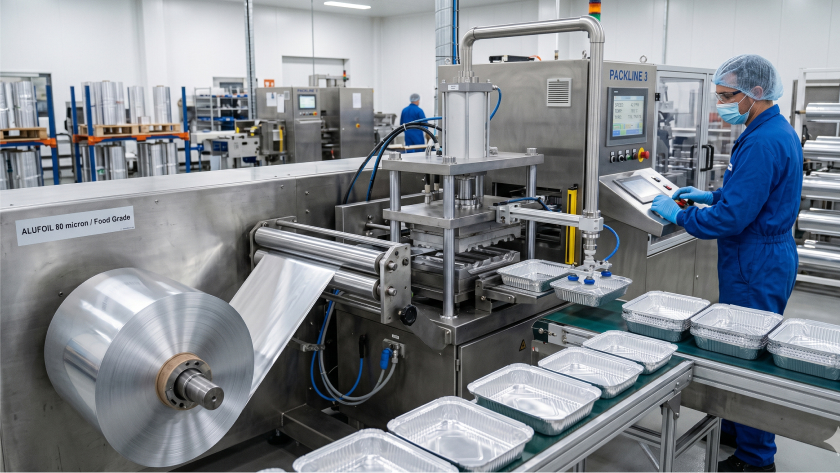
Packaging manufacturing of this kind is operationally complex across its production dimensions. A continuous processing environment requires that raw material input, intermediate work-in-progress, and finished goods output be tracked across stages that operate in different units of measure. Managing inventory, production costs, and output quantities consistently across these stages demands precise system support at each point in the workflow.
Existing Systemic Lacunae
The organization's manufacturing processes were not supported by an integrated system prior to this engagement. Core workflows across production cost tracking, bill of materials management, and manufacturing execution relied on manual processes and fragmented records, making it difficult to maintain data consistency across the production environment.
These limitations had a direct impact on financial visibility and operational control. The absence of defined cost accumulation mechanisms meant that production economics could not be accurately assessed, and manufacturing activity could not be governed within a single system.
Virtual Bill of Materials for Configurable Packaging Products
The organization's packaging catalogue comprised aluminium-based products sharing a common production structure but differentiated by specific physical characteristics. Each distinct product variant required its own bill of materials to define the inputs and operations required for production. For a manufacturer managing a broad product range, this created a direct multiplication of BOM records across the catalog.
Without this capability in the legacy system, a separate BOM was required to be created and maintained for each variant. Any change to a shared input, a raw material, a processing step, or a quantity, had to be replicated manually across every affected variant record. This made catalogue expansion operationally burdensome and increased the risk of inconsistencies accumulating in related BOMs over time.
The manufacturing capabilities of Apache OFBiz were configured to support BOM management at the virtual product level. A virtual product was defined as a logical grouping of variants sharing a common production structure, with each variant product materialized from it through a unique combination of selectable features. A single BOM was maintained at the virtual level and resolved to the appropriate variant at the point of production. This capability was built and delivered for the first time as part of this engagement, extending beyond the standard manufacturing module available in Apache OFBiz.
Multi-Level Manufacturing Supported Through Virtual BOMs
Aluminium packaging manufacturing involves a production process with multiple levels of assembly. A finished packaging product requires sub-assemblies that themselves depend on further sub-assemblies, creating a chain of dependent manufacturing stages that must be completed in sequence. Managing this depth of production natively within a system without custom development is a capability most ERP platforms do not support out of the box.
For the lack of such capabilities within the legacy system, the multi-level manufacturing process could not be modelled or executed within a single system. Each level of the production hierarchy was managed independently, with no system-driven mechanism to govern operations and material flow across levels.
The native multi-level BOM constructs within Apache OFBiz were leveraged to execute the manufacturing hierarchy established through the virtual BOM setup. Each level of the production workflow, from finished goods down through multiple levels of sub-assemblies, was governed by a virtual BOM defining the operations and material requirements for that stage. Execution progressed through each level in sequence, with outputs from lower-level BOMs feeding the inputs of the next. The complete multi-level manufacturing process was executed and traced within a single system without requiring custom development, using a capability natively available within Apache OFBiz.
Cost of Production and Accounting Integration
The cost of manufactured goods in a continuous processing environment accumulated across multiple production stages. For this organization, it included the cost of raw aluminium input, the landed costs incurred through international procurement, and the conversion costs accumulated as material moved through each stage of the line. Capturing these costs accurately and transferring them to the accounting system was essential for inventory valuation and cost of goods reporting.
Without systematic cost tracking across production stages, production costs were not captured at each stage. Cost transfers to the accounting system relied on manual entries, resulting in incomplete records and reconciliation gaps between production data and accounting books. The organization had no consistent basis for computing the full cost of manufactured goods, limiting its ability to price output or assess production margins accurately.
The manufacturing and cost management capabilities within Apache OFBiz were enhanced to support end-to-end production cost tracking and accounting integration. The system was designed to accumulate costs as production progressed through each stage, capturing raw material consumption values, applicable landed costs, and conversion costs at each processing step. General ledger postings were pushed to the accounting system in real time, ensuring that financial records reflected the full cost of manufactured goods as production activity occurred rather than after the fact.
Summary
This case study demonstrated how manufacturing operations in the packaging industry were brought under a single system built to reflect the structural complexity of a continuous, multi-level production environment. Manufacturing constructs within Apache OFBiz were leveraged and extended to support virtual product-level BOM management, multi-level assembly execution, unit of measure conversion across production stages, and end-to-end production cost tracking with real-time accounting integration.
The result was a manufacturing environment where bill of materials complexity was governed at the virtual product level, production activity was traced through multiple levels of assembly within a single system, and the full cost of manufactured goods was captured and transferred to financial records as production occurred. The case also described the use of open-source technologies such as Apache OFBiz and Moqui to build custom manufacturing solutions, supporting organizations in aligning system architecture with the specific demands of their production operations.